
Knowledge Hub
Practical guidance on structure selection, pouch formats, barrier performance, and the conversion decisions behind a reliable pack.
Learn Before You Specify
Good packaging decisions start with understanding the problem: how a product fills, how it travels, how long it must stay fresh, and what the shelf demands of it. The articles in our blog work through these questions one format and one category at a time, from choosing a pouch format and evaluating retort packaging to weighing flexible formats against rigid alternatives.
Browse the blog for guides, or explore our products and markets pages for format-specific and category-specific detail.
Frequently asked
How do I choose a pouch format?
Start with the product and the filling line, not the format. How the product flows, how it is filled, how long it must stay fresh and how it should present on shelf all narrow the choice. Varna engages on structure and machinability before production to make that call with you.
What is retort packaging?
Retort packaging is a multi-layer laminate pouch engineered to withstand high-heat sterilisation, typically above 120°C. It is a lighter, faster alternative to canning for shelf-stable foods such as ready meals, sauces and seafood.
Are flexible pouches recyclable?
Many flexible structures are recyclable, and mono-material options exist for stand-up, flat-bottom and other formats. Multi-layer laminates may need dedicated recycling streams. Varna produces recyclable and mono-material structures when a brief calls for them.
What is the difference between flexible and rigid packaging?
Flexible packaging weighs less, ships in far smaller volumes and offers more print area than rigid containers, which lowers logistics cost and waste. Rigid formats offer more structural protection. For most food and household products, a well-engineered pouch matches the protection at lower total cost.
What barrier does my product actually need?
It depends on what spoils the product. Moisture-sensitive products (biscuits, powders, spices) need a low moisture-transmission (MVTR) structure; oxygen-sensitive products (coffee, nuts, cured meats) need a low oxygen-transmission (OTR) structure, often with a foil or metallised layer. Varna specifies the layer stack against the shelf life and climate the pack has to survive, rather than over-engineering a barrier you do not need.
Gravure or flexo printing, which suits my order?
Rotogravure gives the best consistency and lowest unit cost on large, repeat runs, so it suits high-volume SKUs. CI flexography is more economical for mid-size orders and shorter runs because the plates cost far less than gravure cylinders. Varna runs both in-house up to nine colours, so the order size decides the process rather than the process limiting the order.
What types of lamination are there, and why do they matter?
Varna runs solvent, solventless and water-based lamination. The system is chosen to suit the structure and the end use: solventless is fast and low-odour for most food laminates, solvent-based suits demanding high-barrier or retort structures, and food-contact adhesives are used as standard. Lamination is what bonds the print, barrier and seal layers into one reliable web.
How is shelf life validated before a pack goes to market?
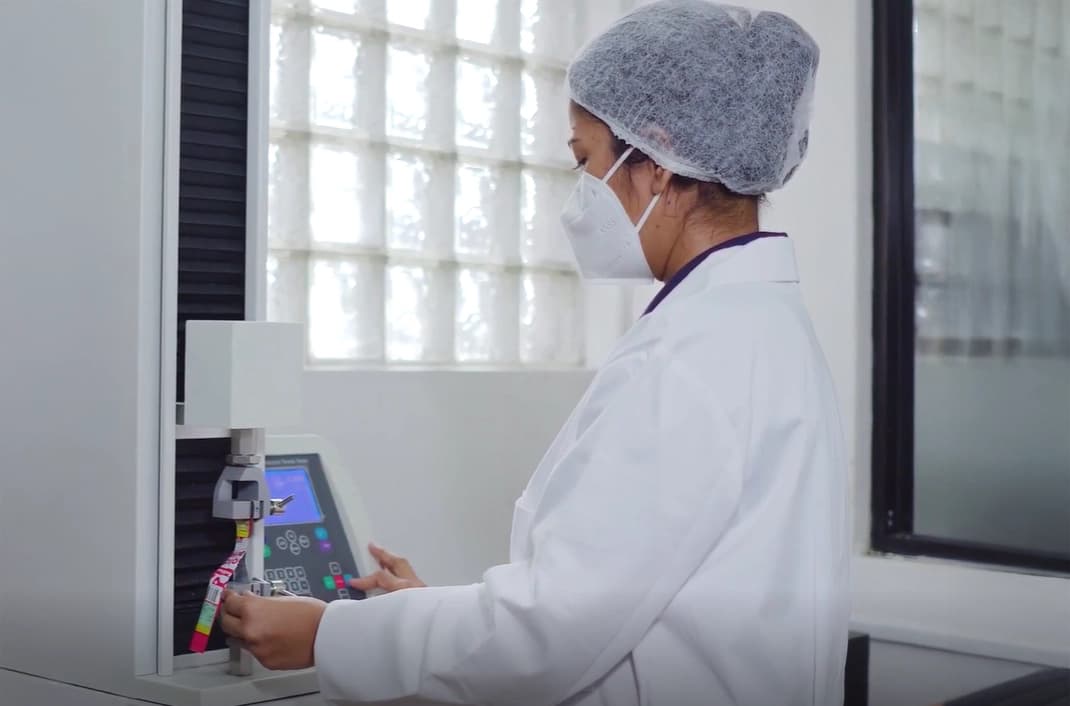
Through the specification and testing, not guesswork. Varna checks each structure against the barrier, seal strength and machinability the product needs, with in-house laboratory checks on every order and inline print inspection on the presses. For a new structure, accelerated conditions and the target distribution climate inform the layer choice before you commit to a full run.
Can you match an existing pack or take cost out of it?
Yes. Varna reverse-engineers a current pack and proposes a like-for-like match, or down-gauges and redesigns the structure to remove material and cost while holding the barrier, seal and machinability the product needs. This is often where the biggest saving sits, before print or format is even discussed.
