
Retort Pouches for Ambient Ready Meals: The Print Survives the Same Heat as the Food
By Chamindra Gamage, Managing Director

In almost every flexible pack, decoration and function are separate concerns. In a retort pouch, they are not. The ink, the lamination bond and the seal all sit inside the same vessel as the meal, and pass or fail on the same cycle.
Print a carton, and the ink sits on the outside, doing one job: looking right on the shelf. Print a retort pouch for an ambient ready meal, and that same ink goes into a vessel at well over 120°C, under pressure, for as long as it takes to sterilise a curry or a stew. The print is not decoration applied after the packaging is proven safe. It is part of what gets tested.
One cycle, tested for two different things at once
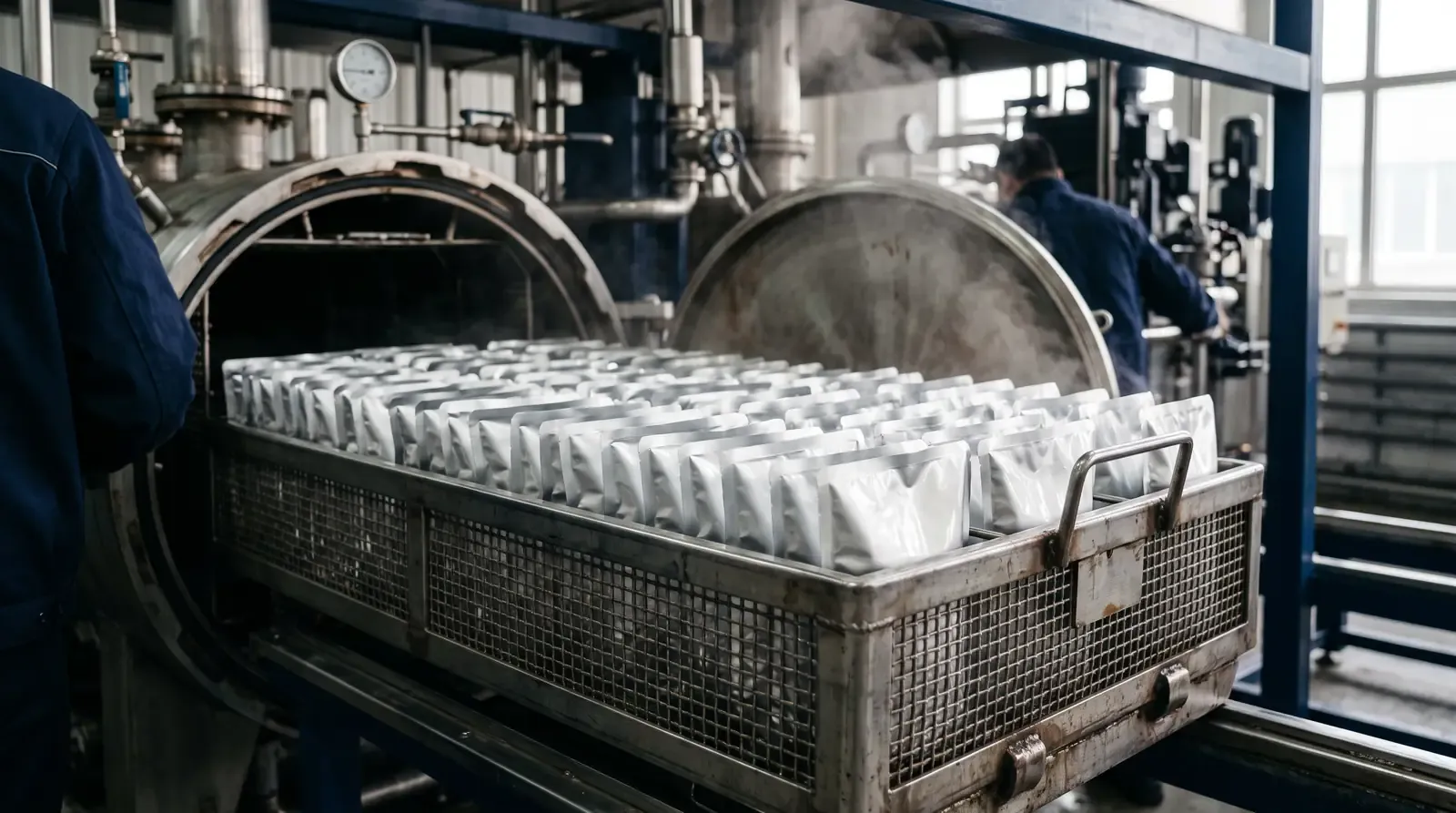
Retort sterilises by heat and pressure, held long enough to reach commercial sterility at the centre of the pack. That part is well understood. Less discussed is that everything else built into the pouch rides through the identical cycle: the ink, the adhesive bonding the layers together, the barrier film, and the seal. None of it is added afterward. If any one of those fails under retort conditions, so does the pack, whether or not the food itself was ever at risk.
This is what separates a retort pouch from most other flexible formats. A stand-up pouch for a dry snack is printed, laminated, filled and sealed, and each of those steps can be validated more or less on its own terms. A retort pouch has one more step after all of that: the entire assembled pack, print included, goes through a thermal process closer to what the food itself has to survive.
Why the print is usually buried, not sitting on top

Surface-printed film exposed directly to retort conditions risks scuffing, discolouration and ink adhesion loss under sustained heat and pressure. That is why retort pouches are typically reverse-printed and laminated, with the ink sandwiched between the outer film and the layers beneath it, protected by the structure rather than left to survive the cycle unshielded. The choice of finish matters here too: a matte varnish that looks right on a shelf sample still has to hold that finish after the exact time and temperature the product's retort profile calls for, not just under normal handling.
That is also why the barrier structure gets decided before a single colour is chosen, not after. Varna's film extrusion is in-house, so the structure underneath the print is controlled from the start rather than sourced as a finished film from three steps removed. Rotogravure for larger order sizes, CI flexographic printing for mid-size orders, up to nine colours on both, with matte varnish finishes still uncommon in Sri Lanka's base.
Print, bond and seal are all tested in the same vessel, on the same day, as the food.
The seal carries the whole claim
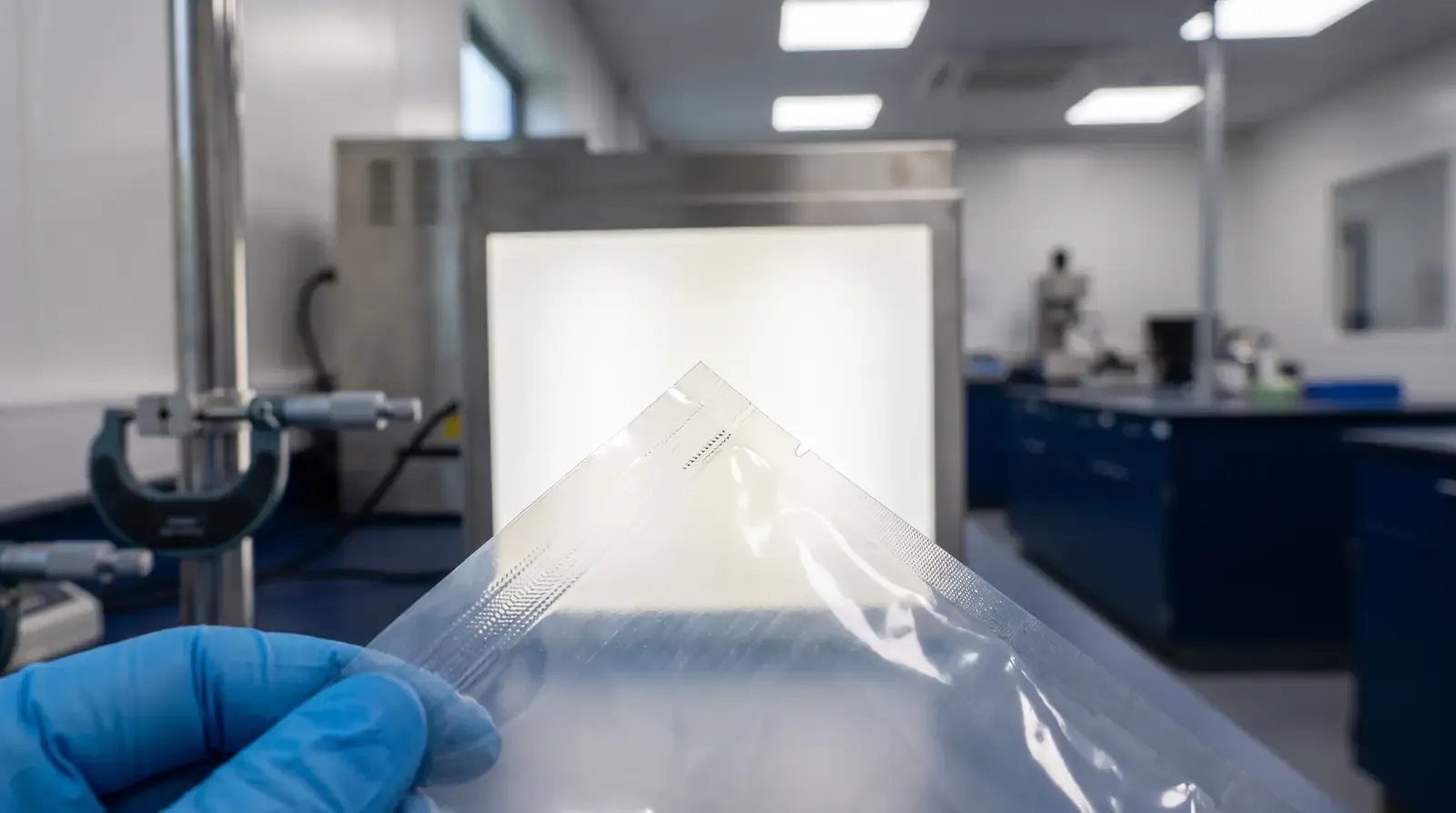
A pouch has no rigid seam to fall back on. The heat seal is the single joint the entire shelf-stability claim depends on, and retort adds a second demand on top of forming it: the seal has to hold its strength through the same heat and pressure that sterilises the contents, not just at the moment it is made. A seal that looks sound straight off the sealing bar can still weaken under retort conditions if the seal width, the sealant resin or the contamination control on the sealing surface is off by a small margin.
This is why seal integrity gets checked, not assumed. Every reel at Varna passes through an in-house lab and in-line defect detection before it leaves the plant, held to BRCGS and FSSC 22000 through every audit, at a 98.8 per cent external production acceptance rate. The check exists because the retort cycle is exactly the kind of stress that finds a marginal seal, at the point where finding it is most expensive: after filling, not before.
What an ambient ready meal asks of a retort pouch
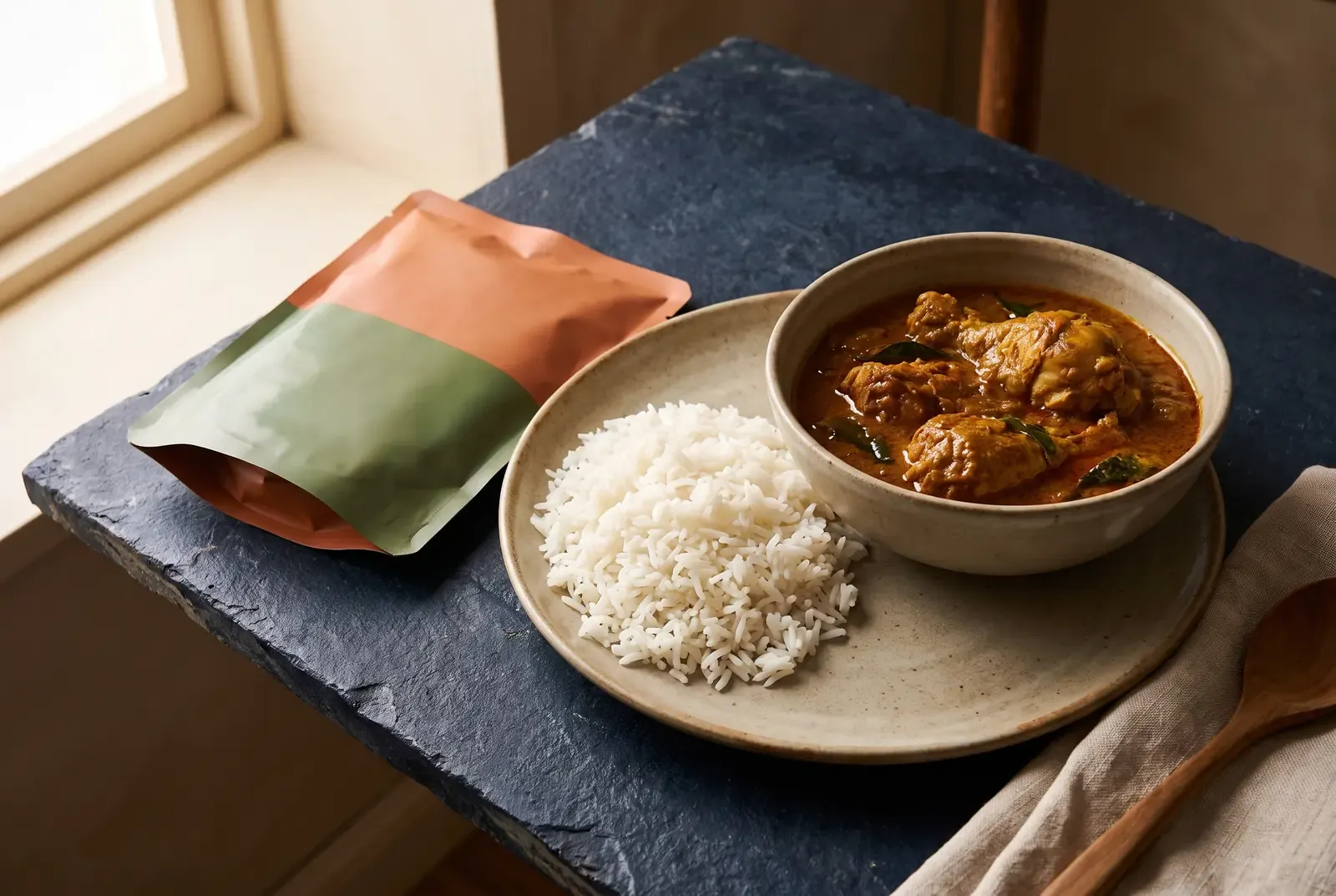
A curry, a gravy or a stew is a harder retort case than a dry retort product. Oil migrates and can attack a laminating bond over the pack's shelf life. Acidity and spice compounds interact with sealant resins differently than a neutral filling does. Particulates can sit at the seal line during filling, which is exactly where a seal is most likely to fail if the packing process is not controlled for it. None of this is unusual, and it is exactly why the structure, the print position and the seal specification for an ambient ready meal are decided against the product going into the pack rather than treated as a generic retort pouch template.
Specifying a retort pouch for an ambient ready meal? Send us the product, the fill and the retort profile, and we will work through print position, barrier structure and seal specification against what that specific meal puts through the cycle. See our retort pouches and the wider pouch range, or read Retort Packaging in Sri Lanka: what it is and when to use it. Call +94 11 2632971 or request a quote.
Common questions
- Why can't a retort pouch use ordinary printed film?
- Ordinary surface print is exposed to the retort cycle's heat and pressure directly, which risks scuffing, discolouration and ink adhesion loss. Retort pouches are typically reverse-printed and laminated so the ink sits protected within the structure, not on the surface facing the retort environment.
- Does the print go through the same heat that sterilises the food?
- Yes. The pouch is fully assembled, filled and sealed before it enters the retort vessel, so the print, the lamination bond and the barrier film all pass through the same cycle as the contents.
- Why do retort pouch seals fail after processing rather than before?
- A seal can look sound right after sealing and still weaken once it has been through the retort cycle. That is why seal integrity is checked after processing, not assumed from how the seal looks off the sealing bar.
- Do ambient ready meals need a different retort structure than dry retort products?
- Often, yes. Oil, acidity, spice compounds and particulates in a wet ready meal put different demands on the laminating bond and the seal line than a dry or neutral filling does, so the structure is specified to the product.
Working through a packaging decision?
The thinking in these articles is the thinking we bring to every brief. Put your product in front of our technical team.
