As food formats evolve and distribution networks expand, packaging needs to do more than contain a product. It must preserve quality, ensure safety, and support longer shelf life without adding complexity to operations.
This is where retort packaging in Sri Lanka has become increasingly relevant. Used across ready-to-eat meals, sauces, seafood, pet food, and nutraceuticals, retort packaging offers a practical solution for products that require both durability and extended shelf stability.
Understanding how it works, when to use it, and what to look for in a supplier can help businesses make more informed packaging decisions.
What Is Retort Packaging?
Retort packaging refers to flexible packaging designed to withstand high-temperature thermal processing, typically above 120°C, used to sterilise food products after sealing.
In simple terms, the product is packed, sealed, and then heat-treated inside the package. This process eliminates microorganisms, allowing the product to remain shelf-stable without refrigeration.
Retort food packaging Sri Lanka applications commonly include:
- Ready-to-eat meals
- Curries and gravies
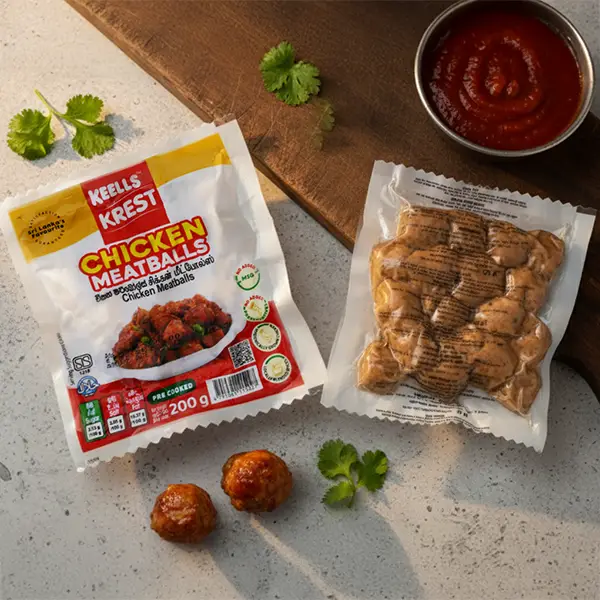
- Seafood and meat products
- Sauces and condiments
- Baby food and nutraceutical products
The structure of retort pouch packaging in Sri Lanka typically includes multiple layers, combining strength, heat resistance, and barrier protection against moisture, oxygen, and light.
Why Retort Packaging Is Used
Retort packaging is not just about shelf life. It is about balancing product safety, convenience, and operational efficiency.
1. Extended Shelf Life Without Refrigeration
Retort processing allows products to remain stable for months or even years at ambient temperatures. This is particularly valuable for export markets and regions with varying storage conditions.
2. Product Safety and Sterility
The thermal process ensures microbial safety, making retort packaging suitable for sensitive food categories where hygiene and compliance are critical.
3. Lightweight and Efficient
Compared to rigid formats like cans or glass jars, retort pouches are significantly lighter, reducing freight and storage costs.
4. Better Heat Penetration
Flexible pouches allow faster and more uniform heat transfer during processing, which helps maintain product texture and flavour.
When Should You Consider Retort Packaging?
Not every product requires retort packaging. It becomes relevant when both shelf stability and product safety are essential.
You should consider retort packaging in Sri Lanka when:
- Your product requires a long shelf life without refrigeration
- You are targeting export or wider distribution
- The product contains moisture and is prone to microbial growth
- You need a packaging format that supports thermal processing
- You want to reduce logistics costs compared to rigid packaging
For categories like ready meals, seafood, and sauces, retort packaging is often the most practical solution.
Key Considerations in Retort Pouch Design
Retort packaging is highly functional, but its performance depends on correct material and structure selection.
Barrier Performance
The pouch must protect against oxygen and moisture to maintain product stability over time.
Heat Resistance
Materials must withstand high temperatures without deformation or compromise in seal integrity.
Seal Strength
A strong and consistent seal is critical to ensure sterility is maintained throughout shelf life.
Compatibility with Filling and Processing
The packaging must work seamlessly with your filling lines and retort systems.
Well-engineered retort pouch packaging solutions in Sri Lanka are designed with these factors in mind, ensuring consistency during both processing and storage.
What to Look for in Retort Packaging Suppliers
Choosing the right partner is as important as choosing the right packaging format. Not all retort packaging suppliers in Sri Lanka offer the same level of expertise or reliability.
Here’s what to evaluate:
1. Experience with Retort Applications
Retort packaging requires a precise understanding of material behaviour under heat and pressure. Suppliers should have proven experience in this segment.
2. Material and Structure Expertise
A good supplier will recommend the right laminate structure based on your product, not a standard template.
3. Quality and Consistency
Look for controlled manufacturing processes that ensure uniform seal strength, thickness, and barrier properties.
4. Testing and Validation Support
Suppliers should support trials and validation to ensure the packaging performs correctly during retort processing.
5. Scalability
As your product grows, your packaging partner should be able to scale without compromising consistency.
Working with experienced retort pouch manufacturers in Sri Lanka ensures your packaging performs reliably across production cycles and distribution conditions.
Retort Packaging vs Traditional Formats
Retort pouches are often compared with cans and glass jars.
While traditional formats offer structural rigidity, retort pouches provide:
- Lower weight
- Reduced transportation costs
- Efficient storage
- Faster heat processing
However, the choice ultimately depends on product type, brand positioning, and operational setup.
Conclusion
Retort packaging plays a critical role in enabling safe, shelf-stable food products without compromising quality or efficiency.
For businesses exploring retort food packaging in Sri Lanka, the focus should not just be on the format, but on how well it integrates with product requirements and processing conditions.
At Varna Packaging, this means delivering retort solutions that are built for consistency, compatibility, and long-term performance. Working with the right partner ensures your packaging performs as expected through processing, storage, and distribution. With the right approach, retort packaging becomes a reliable solution for sustained product stability and operational efficiency.
FAQs
1. What is retort packaging used for?
It is used for shelf-stable food products that require thermal sterilisation, such as ready meals, sauces, and seafood.
2. Is retort packaging better than cans?
It depends on the application. Retort pouches are lighter and more efficient, while cans offer higher structural rigidity.
3. How long does retort packaging last?
Products can remain shelf-stable for several months to years, depending on formulation and processing.
4. Can retort pouches handle high temperatures?
Yes, they are designed to withstand high-temperature sterilisation without compromising seal integrity.
5. What should I look for in retort packaging suppliers in Sri Lanka?
Experience, material expertise, quality consistency, and support during testing and validation.
6. Are retort pouches suitable for export products?
Yes, they are widely used for export due to their long shelf life and reduced logistics costs.