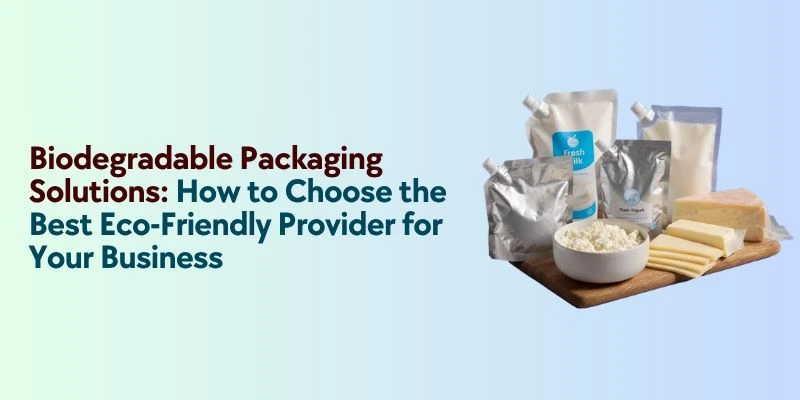
As sustainability becomes a core priority across industries, packaging is undergoing a significant transformation. Businesses are now expected to reduce environmental impact while maintaining product quality and performance.
This shift has led to increasing demand for biodegradable packaging solutions—materials designed to break down naturally without harming the environment. However, selecting the right eco-friendly packaging partner requires careful consideration.
In this guide, we explore how to choose a provider that delivers both sustainability and performance.
Why Biodegradable Packaging Solutions Matter
Traditional packaging materials, particularly plastics, contribute to long-term environmental challenges. Biodegradable packaging offers a more responsible alternative by reducing waste and supporting circular economy goals.
Businesses adopting biodegradable packaging can:
- Reduce their environmental footprint
- Meet regulatory and compliance requirements
- Align with consumer demand for sustainable products
- Enhance brand reputation and trust
- Support long-term sustainability strategies
For industries such as food and personal care, eco-friendly packaging is becoming an essential part of product positioning.
Key Factors to Consider When Choosing an Eco-Friendly Packaging Provider
Not all biodegradable packaging solutions are created equal. The right provider should balance sustainability with functionality and reliability.
1. Material Expertise and Innovation
Biodegradable packaging involves specialized materials that must meet performance requirements while remaining environmentally friendly.
A capable provider should:
- Offer a range of biodegradable and compostable materials
- Understand product compatibility and shelf-life requirements
- Continuously invest in material innovation
Choosing the right material is critical to ensuring both product safety and sustainability.
2. Performance and Barrier Properties
Sustainability should not come at the cost of performance. Packaging must still protect the product from moisture, oxygen, and contamination.
Evaluate whether the provider can deliver:
- Adequate barrier protection
- Structural durability
- Compatibility with different storage conditions
For example, products requiring extended shelf life may still need advanced packaging structures alongside eco-friendly materials.
3. Certifications and Compliance
A reliable eco-friendly packaging provider should meet recognized environmental and industry standards.
Look for:
- Verified biodegradable or compostable certifications
- Compliance with food safety and regulatory requirements
- Transparent documentation of materials and processes
Certifications ensure that sustainability claims are credible and verifiable.
4. Customization and Design Flexibility
Even with biodegradable materials, customization remains essential.
Your provider should offer:
- Flexible packaging formats (pouches, films, wraps)
- Branding and printing options
- Tailored designs suited to your product
This ensures your packaging not only performs well but also represents your brand effectively.
5. Sustainable Manufacturing Practices
True sustainability goes beyond materials. The manufacturing process itself should minimize environmental impact.
Consider whether the provider:
- Uses energy-efficient production methods
- Reduces waste during manufacturing
- Follows responsible sourcing practices
A holistic approach to sustainability adds greater value to your packaging strategy.
6. Scalability and Supply Reliability
As demand for eco-friendly packaging grows, your provider must be able to scale production without compromising quality.
Key factors include:
- Consistent supply chain management
- Ability to handle bulk orders
- Reliable delivery timelines
This ensures uninterrupted business operations as your brand expands.
7. Consultative and Long-Term Approach
The transition to biodegradable packaging often requires guidance and testing. A strong provider will act as a partner throughout this process.
Look for a company that:
- Provides technical consultation
- Offers prototyping and sampling
- Supports long-term sustainability goals
A collaborative approach leads to more effective and practical packaging solutions.
Common Mistakes to Avoid
When adopting biodegradable packaging, businesses should avoid common pitfalls such as:
- Assuming all “eco-friendly” packaging is fully biodegradable
- Overlooking performance and durability
- Ignoring certifications and compliance
- Choosing providers without scalability
Taking a balanced approach helps ensure both sustainability and functionality.
Conclusion
Biodegradable packaging solutions are becoming an essential part of modern business strategy. They offer a way to reduce environmental impact while meeting evolving consumer and regulatory expectations.
However, success depends on choosing the right partner—one that combines material expertise, quality standards, customization, and reliability.
At the same time, businesses need a provider that understands how to balance sustainability with real-world performance. Companies like Varna Packaging are increasingly focusing on delivering innovative and responsible packaging solutions that align with both environmental goals and industry demands.
By selecting the right eco-friendly packaging partner, businesses can move toward a more sustainable future without compromising on quality or efficiency.
FAQs
1. What are biodegradable packaging solutions?
Biodegradable packaging solutions are materials designed to naturally break down over time through biological processes, reducing environmental impact.
2. How is biodegradable packaging different from recyclable packaging?
Biodegradable packaging decomposes naturally, while recyclable packaging is processed and reused through recycling systems.
3. Are biodegradable packaging materials safe for food products?
Yes, when certified and properly tested, biodegradable materials can meet food safety standards.
4. What industries benefit from biodegradable packaging?
Food and beverage, personal care, pharmaceuticals, and retail industries benefit from eco-friendly packaging solutions.
5. Does biodegradable packaging affect product shelf life?
It depends on the material and structure. A reliable provider ensures proper barrier properties to maintain shelf life.
6. How do I choose the right eco-friendly packaging supplier?
Evaluate material expertise, certifications, customization options, sustainability practices, and supply reliability.